Visit of the Magi
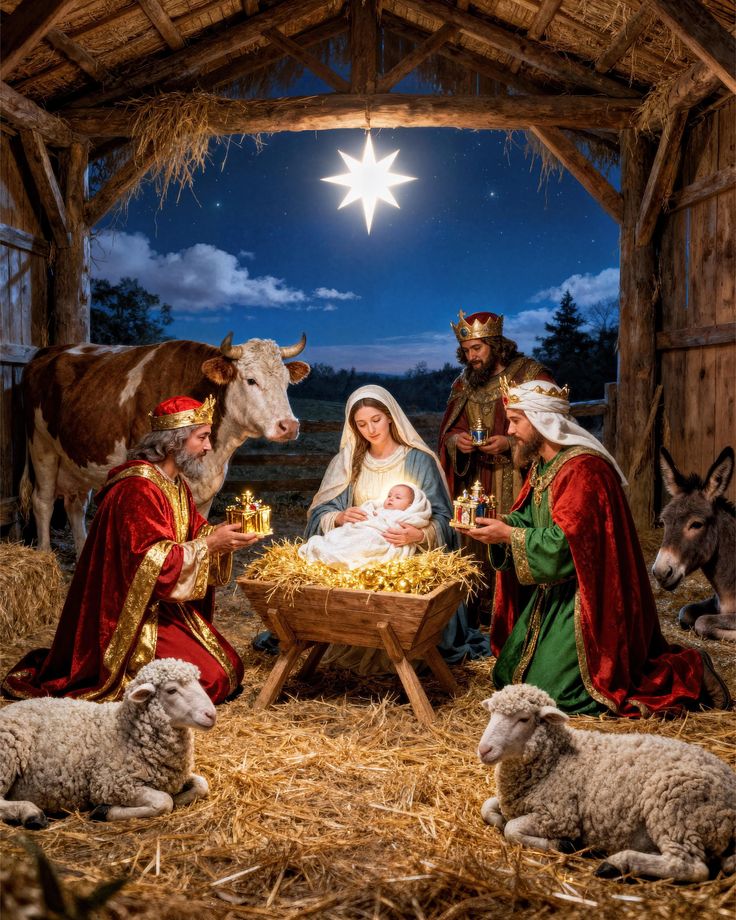
Now after Jesus was born in Bethlehem of Judea in the days of Herod the king, behold, wise men from the east came to Jerusalem, saying, “Where is he who has been born king of the Jews? For we saw his star when it rose and have come to worship him.” When Herod the king heard this, he was troubled, and all Jerusalem with him; and assembling all the chief priests and scribes of the people, he inquired of them where the Christ was to be born. They told him, “In Bethlehem of Judea, for so it is written by the prophet: ‘And you, O Bethlehem, in the land of Judah, are by no means least among the rulers of Judah; for from you shall come a ruler who will shepherd my people Israel.’”
Then Herod summoned the wise men secretly and ascertained from them what time the star had appeared. And he sent them to Bethlehem, saying, “Go and search diligently for the child, and when you have found him, bring me word, that I too may come and worship him.” After listening to the king, they went on their way. And behold, the star that they had seen when it rose went before them until it came to rest over the place where the child was. When they saw the star, they rejoiced exceedingly with great joy. And going into the house, they saw the child with his mother Mary, and they fell and worshiped him. Then, opening their treasures, they offered him gifts, gold and frankincense and myrrh. And being warned in a dream not to return to Herod, they departed to their own country by another way.
—Matthew 2.1-12
Arriving in Jerusalem from the east after Jesus was born, wise men followed a star to find him, believing he was the new king of the Jews. The “magi” were priests or court advisers from probably Persia. Archaeologists have found numerous accounts of ancient astrologers interpreting astronomical phenomena as heralding the birth of kings. The star may be a planetary conjunction, a supernova, or something purely supernatural. It alludes to the star of Jacob from the prophecy of Balaam in Numbers 24.17. The wise men’s question indicates that Jesus was born King of the Jews. His kingly status was not conferred upon him later; it was his from birth.
King Herod, disturbed by this, asked religious leaders where the Messiah would be born. “All of Jerusalem” was “troubled” along with Herod because they knew that any question like what the wise men asked would result in more cruelty from the ailing Herod, whose paranoia had already led him to murder his favorite wife and two sons. The religious leaders replied, “Bethlehem, as foretold by the prophet” in Micah 5.2. Although Bethlehem appeared to be insignificant in size, it was in truth important.
Herod secretly questioned the wise men about the star’s timing and sent them to Bethlehem to find the child and report back, hoping to learn his location. The star led them to the house where they found Jesus with Mary. Jesus was no longer in a stable (Luke 2.7). The visit was perhaps a year or more after his birth. They worshiped him and gave gifts of gold, frankincense, and myrrh. Matthew records the gifts to show fulfillment of Psalm 72.10 and Isaiah 60.6 where Gentiles bring their wealth to Israel’s king. Warned in a dream not to return to Herod, they went home by another route.
Themes of Importance
- Prophecy Fulfilled: The birth of Jesus in Bethlehem fulfills ancient prophecies about the Messiah’s arrival.
- Divine Guidance: Central to the narrative, the wise men are led by a star, symbolizing spiritual direction and faith. Divine guidance in this story is portrayed through signs (the star), spiritual insight (the dream), and the wise men’s faithful response. It underscores the belief that those who earnestly seek truth and are open to spiritual direction will be led and protected, even in the face of worldly obstacles.
- Worship and Reverence: The wise men honor Jesus with gifts and worship, recognizing his significance.
- Deception and Danger: King Herod’s secretive actions and intentions introduce a theme of threat and deceit.
- The Star as a Symbol: The wise men are guided by a star, which acts as a visible sign from God, leading them to the birthplace of Jesus. This star is not just a physical phenomenon but a symbol of spiritual direction, suggesting that those who seek truth and meaning are aided by divine intervention.
- Faith and Obedience: The wise men’s willingness to follow the star over a long distance demonstrates their faith. They trust in the sign given to them, even though the journey is uncertain. Their actions show that faith often involves stepping into the unknown, trusting in guidance that may not always make logical sense.
- Divine Warnings: After visiting Jesus, the wise men are warned in a dream not to return to Herod. This dream is another form of divine guidance, protecting both the wise men and the child from danger. It highlights the idea that God not only leads seekers toward truth but also protects them from harm when they are receptive to spiritual direction.
- Spiritual Insight vs. Worldly Power: The wise men, guided by divine signs, contrast with King Herod, who relies on political power and deception. This juxtaposition emphasizes that true wisdom and direction come from a higher source, not from earthly authority.
- Obedience to Divine Warning: The wise men heed a dream’s warning, choosing a different path home to avoid Herod.

 Duck in the Pulpit
Leave a comment